
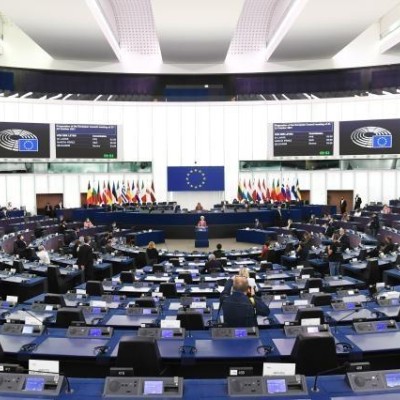
The new European Democracy Shield: what’s in it for culture
In November 2025, the European Commission proposed a new strategy to strengthen democracy in the EU — the European Democracy Shield — building up on the European Democracy Action Plan. The strategy is based on the recognition that democracy in Europe is under threat and cannot be taken for granted in times of multiple, overlapping challenges. Its main rationale is the need to protect democracy and its citizens from growing risks posed by both internal and external actors. The EU’s core values are presented as the foundation for its future and its unity in a ‘fractured world’.
The Democracy Shield is built around three main objectives:
- Protect and defend democracy and increase societal resilience and preparedness.
This strand focuses on countering foreign information manipulation and interference online, and on enhancing digital and media literacy. Planned initiatives include establishing a European network of fact-checkers and addressing emerging threats to electoral integrity through the AI Act, the Digital Services Act and the Regulation on the transparency of political advertising.
- Strengthen the rule of law for a fair and well-functioning society.
The rule of law is presented as one of the EU’s fundamental values, essential for protecting fundamental rights, tackling corruption and ensuring the proper functioning of the economy. Measures include continued monitoring of the rule of law, linking EU subsidies to compliance, and implementing the European Media Freedom Act.
- Champion civic engagement and participation to bring citizens’ ideas at the heart of policy-making
Under this objective, the EU will deepen its engagement with civil society organisations working on societal challenges and human rights; support a network of 3,000 local councillors to help illustrate the EU’s impact on everyday life; and follow up on recommendations from the European Citizens’ Panel.
The Democracy Shield also establishes a European Centre for Democratic Resilience, which will bring together expertise and capacities from EU Member States, candidate countries and EU institutions. The Centre will facilitate information sharing, operational cooperation and capacity building to withstand common threats, especially foreign information manipulation, interference and disinformation.
This new strategy is highly relevant for the cultural and creative sectors. First, the issues of democratic resilience are vital for all citizens, and especially for those working in socially engaged fields such as art and culture. More concretely, the strategy matters because future EU-level cultural funding will fall under the AgoraEU programme (as part of the Multiannual Financial Framework 2028-2035) which will integrate Creative Europe and the CERV programme (Citizenship, Equality, Rights and Values) under a broader agenda to strengthen civic participation and Europe’s democratic resilience. As a result, cultural and creative sectors will share a funding instrument with many civil society organisations directly linked to the Democracy Shield, and the AgoraEU budget will be used, among other purposes, for its implementation.
Although artistic freedom is recognised as an ‘important component of democratic fabric and resilience’, the Democracy Shield outlines no concrete measures to strengthen it beyond a reference to the Culture Compass. AgoraEU is mentioned as a key tool for implementing the Democracy Shield, with specific emphasis on the MEDIA+ and CERV+ strands: the former aimed at supporting free and independent journalism and news media, and the latter at fostering free, fair and inclusive electoral processes and strengthening civic participation. By contrast, the Creative Europe strand of AgoraEU, dedicated to supporting cultural and creative sectors, is not mentioned as an instrument for implementing the Democracy Shield.
This omission raises questions about whether culture is genuinely recognised as a force for democracy, despite its symbolic integration with CERV under AgoraEU and despite recent strong statement linking culture and democracy, including the Declaration on the necessity of culture and media as a safeguard for our European democracies, signed during the Danish Presidency of the Council of the European Union by all EU Member States except Hungary, as well as Iceland, Norway, Switzerland, the UK and Ukraine.
Read more about the European Democracy Shield.