
State of the Union 2026: Europe reclaiming its imagination
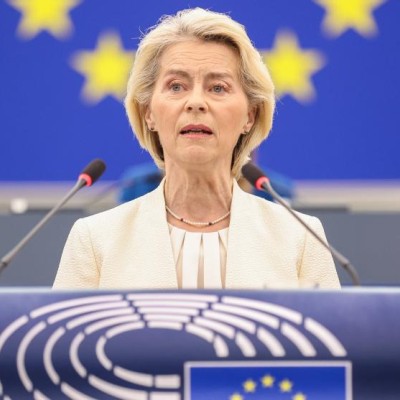
On 16 September, European Commission President Ursula von der Leyen delivered her annual State of the Union address, setting out the Commission’s priorities for the year ahead. The speech ranged from competitiveness, climate resilience and artificial intelligence to social policy, Europe’s global partnerships, security and defence, and migration. Throughout, it presented a stronger and more independent Europe as the response to an increasingly uncertain geopolitical and economic environment.
The Commission President has also announced a new Congress of Europe, to take place in 2027, 70 years after the Treaties of Rome. The initiative is intended to help develop a vision capable of inspiring a new generation of Europeans and, in von der Leyen’s words, to ‘reclaim our European imagination’.
The historical reference is significant for culture. The original Congress of Europe, held in The Hague in 1948, brought together political leaders, intellectuals and civil-society representatives to debate Europe’s future. Its work included a dedicated Cultural Committee, reflecting an understanding that European cooperation could not be built through political and economic structures alone.
Culture was not explicitly addressed in the 2026 State of the Union speech — an omission IETM regrets. Yet some of its closing ideas speak directly to the performing arts: the need to rediscover Europe’s capacity to imagine itself, to create a future capable of inspiring new generations, and to defend democracy and freedom.
These are questions to which the arts have much to contribute. Performing arts create spaces where different futures can be imagined, rehearsed, questioned and negotiated collectively. If the Congress of Europe is genuinely intended to reclaim Europe’s imagination, artists and cultural organisations should have a meaningful place in that conversation.